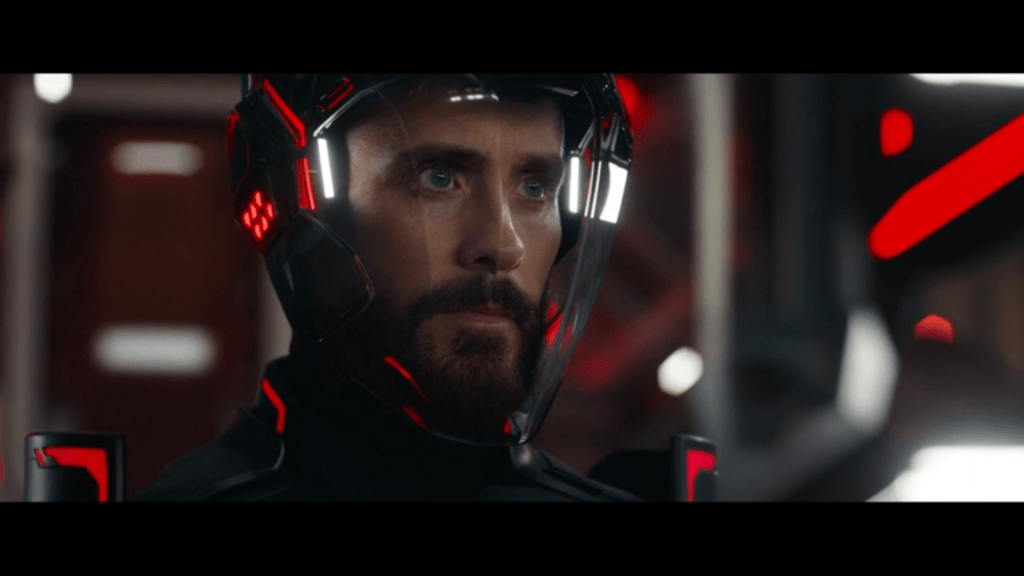
Tron: Ares
4 outta 5
Every decade or two, Disney diligently tries to make Tron a thing. The 1982 original tried to capture the Star Wars audience, then 2010’s Tron: Legacy expanded the visuals and lore of Tron. Now there’s Tron: Ares which doesn’t really build off what happened in Legacy, but this is more about moving the Tron world into the real world. Like both Tron movies before it, Ares has stellar visuals, an amazing soundtrack, great action scenes and an okay story. These films all sort of skate by on groovy tech vibes. Even the title character of Ares is a bit of a letdown, but this goes back to the first movie where the title character of Tron is sort of forgotten about in his own movie, so that gets a pass. Tron is a cool world to visit, even if it suspiciously feels like Disney just makes a Tron movie every 20 years to keep selling lightcycle merch.
In the virtual world of the Grid live Programs that do the bidding of human Users in the real world. The creator of the Grid, Kevin Flynn (Jeff Bridges) disappeared years ago, as did his son and heir, Sam Flynn. Now Flynn’s company, ENCOM, is run by Eve Kim (Greta Lee) as she digs through Kevin’s archives for vital information on how to make programs exist in the real world indefinitely. Her rival, Jullian Dillinger (Evan Peters) has devised a way to print out programs and objects from the Grid into the real world, but they only exist for 29 minutes before dissolving into nothingness (a term called “derezzing”). Now Dillinger wants the Permanence data to make his programs exist in the real world, and he sends two digital warriors, Athena (Jodie Turner-Smith) and Ares (Jared Leto) to retrieve it. But when Ares meets Eve, he decides to do something for himself, protect Eve, and rebel against Dillinger. So with Dillinger’s programs invading the real world, Eve and Ares must dig into the old technology of Kevin Flynn to find the Permanence data and stop Dillinger.

The big twist of the film is that Ares goes from loyal subject of Dillinger to fighting back for himself. It does happen rather quickly. However, with Ares virtually dying for Dillinger every 29 minutes it’s not that much of a leap to assume he doesn’t like it, so that’s why he switches. The visual of the programs derezzing looks kind of like a tech horror movie where they digitally scream and collapse into a pile of virtual blocks. It certainly doesn’t look pleasant. Also, Evan plays Dillinger as very dislikable. He brags that if Ares is killed in combat, he can just print him off again. Julian is the grandson of the bad guy Dillinger from the original Tron with Gillian Anderson playing Jullian’s mother (there was also a Dillinger played by Cillian Murphy in Tron: Legacy who goes unmentioned here). Anderson just sort of clucks disapprovingly (with a very convincing British accent) at her son’s crazy schemes to port programs in the real world.
Leto as Ares has a disconnected weirdness that fits a program that is playing at being a real person. When the movie starts, Ares is referenced as the Master Control, like the Master Control Program of the original film, so referencing Ares as Master Control it makes fans immediately think he’s a bad guy. There are a few moments where it seems a real person is growing in there, like when Ares references one of his favourite artists, Depeche Mode. There is a cool bit when Ares meets Kevin Flynn, the original user played by Jeff Bridges. This version of Flynn seems separate from the character in the first two films; it’s more like a virtual representation of him. So, whatever happened to Flynn at the end of Legacy is unresolved, but this lets Bridges be rather saint-like. Also, the scene between them happens on a recreation of the original Grid from the 1982 film, that gets the visual style perfectly. The brief references to Sam and Quorra from Legacy tee up a sequel potentially that fuses these stories together. As both Ares and Quorra are programs who made it into the “real” world, they could compare notes.

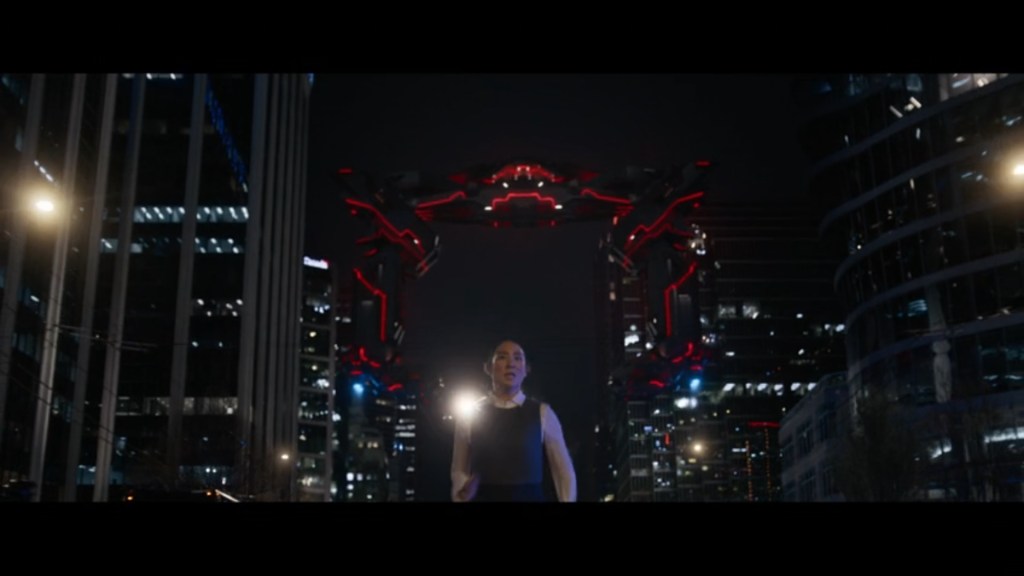
Athena, Ares’ warrior companion turned nemesis, has a Terminator-like determination to fulfill her objective by erasing Eve and Ares. Lee’s Eve gets a mandatory sad backstory about a deceased sister and how Eve wants to save the world with the Permanence program. She gets a really cool lightcycle chase, though. Lightcycles have been cool for decades. The look of the Grid world is striking against the human settings. When one of the big ships shows up and starts shooting out flying machines it looks appropriately apocalyptic. This is propelled by the excellent, discordant techo metal score by Nine Inch Nails. It really accentuates the sci-fi weirdness, like whenever someone is derezzed, the NIN score sounds horrific. And there’s moments when the score can be sweeping and emotional, like when Ares says goodbye to Flynn with a great visual callback to the original Tron.
Tron: Ares definitely feels of a piece of the Tron series, even if it doesn’t really pick up on plot points from Legacy. But like all Tron movies, it can get by on cool visuals, great tunes and vibes. Which is what this series has always been about.
 BigAl Reviews
Leave a comment