
The Boy and the Heron
5 outta 5
The Boy and the Heron is a fantastical, contemplative, and wonderful animated film from one of the masters of Japanese anime, Hayao Miyazaki. It has stupendous visual flair as characters descend into a magical world. Even with all the trippy images, there’s a dramatic story about love and dealing with loss. Also, there’s parakeets that love sword fighting, self-aware talking flames, and a chirpy bird guy who is both sidekick and tormentor. Combined with all the dreamlike images there is still an emotionally powerful core, making for a memorable film.
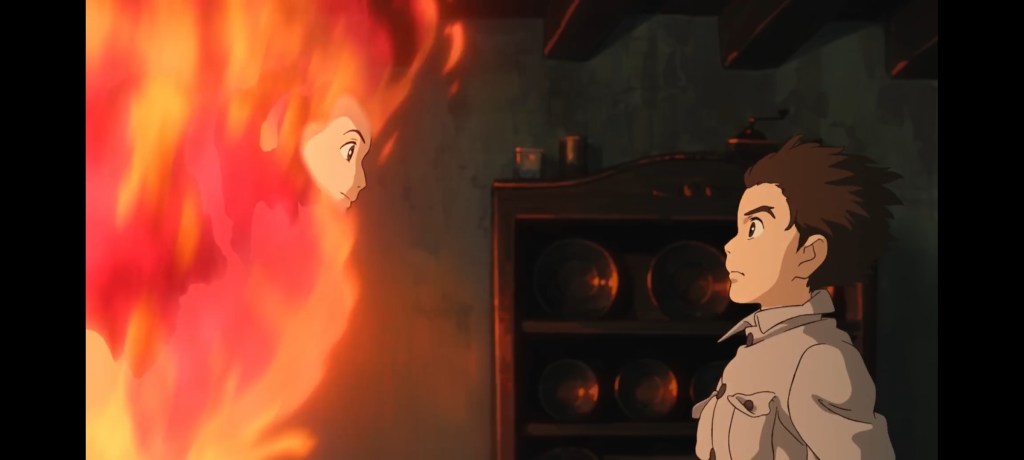
Mahito (Luca Padovan) is a boy in Japan during World War II who loses his mother in a hospital fire. His father, Shoichi (Christian Bale) later remarries to Natsuko (Gemma Chan), the sister of Mahito’s deceased mother. Mahito becomes disillusioned with his new surroundings and isolates himself, even at one point bashing his own head with a rock, much to the worry of his father and the gaggle of old maids that live with them. Soon Mahito is hearing a heron bird-creature (Robert Pattinson) say he can lead Mahito to his mother who is trapped in another world. When entering the magical new world, Mahito encounters floating spirits, talking animals, and giant towers that are a doorway to different realities. He meets an adventuring sailor, Kiriko (Florence Pugh), a woman with magic powers that literally has a flaming spirit, Himi (Karen Fukuhara), the sword wielding Parakeet King (Dave Bautista), and the Granduncle (Mark Hamill) at the centre of the tower. But all these fantastical folks may hide a deeper truth about Mahito and his relationship with his mother.
As this was originally released in Japan, in North America the English cast was only announced a few months ago. It is a matter of personal preference if one wants to see the original Japanese version with English subtitles, or the English dub. For me, watching a dubbed film in live action is somewhat disconcerting. However, foreign language animation dubbed over in English never presents as much of a disconnect because human mouths don’t move quite like animation. Locally at Silvercity Ancaster, the English dub is two screenings in the afternoon and at night the two showings are Japanese with English subtitles. The English dub is pretty seamlessly mixed with the original animation and the voice-over cast is stacked with name actors.

The freakiest performance is Pattinson as the heron. It really isn’t a talking bird, it’s more like a tiny, mean guy stuck inside a heron skinsuit. It works with the offsetting feeling of unreality that permeates the film. Pattinson’s voice is unrecognizable with a crazy growl or high-pitched squeaking. The heron has a truly weird looking image, as its beak opens and there’s a bulbous bit of flesh peeking out from underneath. That is the person inside as their face is slipping through the mask. Eventually, the man sheds the bird outfit and engages with Mahito. The heron invites the boy into the magical world with a promise of being reunited with his long-lost mother, but when Mahito discovers his mother, the result is the heron’s magical trickery in a striking image of the mother melting away. The film is full of trippy bits like this, such as one scene with frogs crawling over Mahito’s face, cajoling him to come join him in the other world.

Pugh as one of the people he meets in the world is nicely bitter as she tries to teach Mahito to toughen up. Padovan as Mahito shows this kid has been very affected by losing his mother and trying to find her is how he deals with loss. As the Parakeet King, Bautista is loud and self-important which is what a sword wielding parakeet would be like. Hamill as the elderly Granduncle has a gravelly voice that gives his character importance. Bale and Chan as Mahito’s parents have a more realistic story about the isolation of living in the Japanese countryside in World War II. There is a funny bit when Bale’s father character sees his kid momentarily appear in the real world and then he hollers that his kid has been turned into a bird.
There is a sense of humour to extreme absurdity. In the “real world” the various old women bicker with each other over cigarettes as nicotine is a scarcity in World War II era Japan. In the new world, spirits rise to be born as new lives, but things look dicey when birds feast upon them. The floating ball spirit folks are very cute and it’s kind of horrifying when it looks like they’ll be burned or eaten alive. There is a lot of fire imagery in the film, befitting the fire trauma that Mahito underwent losing his mother. Fukuhara’s vocal performance as Himi has a lot of emotional depth and more revealed as it goes on. When the magical fire spirit reveals her connection to Mahito, it works well dramatically.
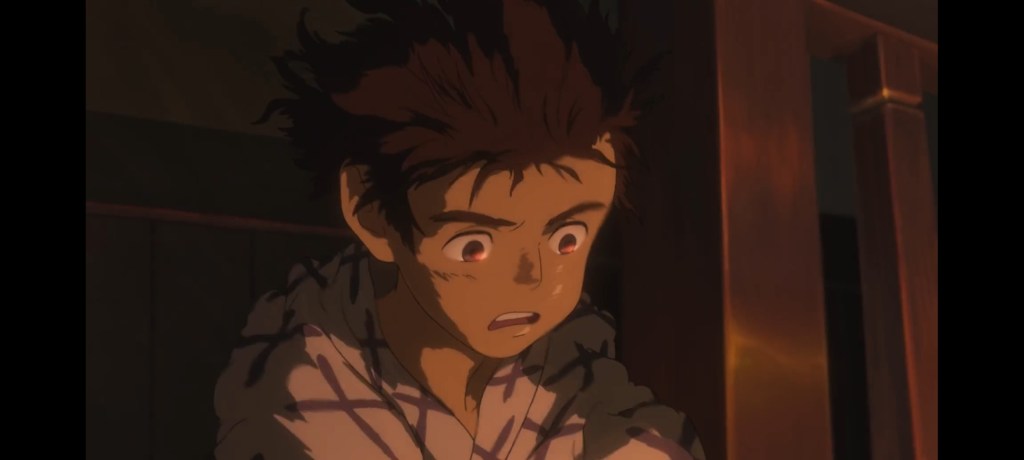
Along with Spider-Man: Across the Spider-Verse, The Boy and the Heron shows off the immense potential animation has. Heron works well with the recently released (and awesome) Godzilla Minus One as a fantasy look at WWII era Japan. In Heron, the trauma of the real-world ties into the otherworldly weirdness and through the journey, wounds begin to heal.
 BigAl Reviews
Leave a reply to Blog: Oscars Catch-Up – BigAl Reviews Cancel reply